
You don’t have to walk this journey alone.
When your child is showing signs of neurodivergence, has recently received a diagnosis, or you are trying to understand what support may be available, it can feel overwhelming.
There are new terms to understand, appointments to organise, decisions to make and systems to navigate.
I’m Madonna Volkman, a parent who has spent more than 20 years supporting my own neurodivergent children and navigating the challenges that can come with diagnosis, services, education and the NDIS.
I created The Spectrum Journey to give parents the practical guidance, reassurance and hope I wish I had received when my own journey began.

Real guidance from a parent who’s walked the path.
It’s normal to feel unsure about what comes next.
You may be wondering whether your concerns are valid, who you should speak to, what questions you need to ask or how you will manage everything your family may need.
You do not need to have all the answers today.
Sometimes the first step is simply talking to someone who understands the emotional and practical reality of the journey.

Understanding Your Next Steps
Preparing for Appointments

Navigating NDIS

Ongoing Parent Support
Identify questions to ask, information to gather and concerns you may want to raise with health, education or support professionals.
Identify questions to ask, information to gather and concerns you may want to raise with health, education or support professionals.
Receive practical, lived-experience guidance to help you understand terminology, prepare for conversations and feel more confident navigating the system.
Have someone in your corner who understands that this journey can be emotional, exhausting and difficult to navigate alone.

Meet Madonna
A parent, a guide and someone who understands
For more than 20 years, I have advocated for my two neurodivergent sons, searched for answers, attended appointments, navigated education and support services, and worked through the complexities of the NDIS.
I know what it feels like to wonder whether you are asking the right questions. I also know how much difference it can make when someone listens without judgement and helps you see the next step more clearly.
The Spectrum Journey was created so other parents can benefit from the knowledge, experience and practical lessons I have gathered along the way.
Free Resource
Not sure whether it's time to seek further support?
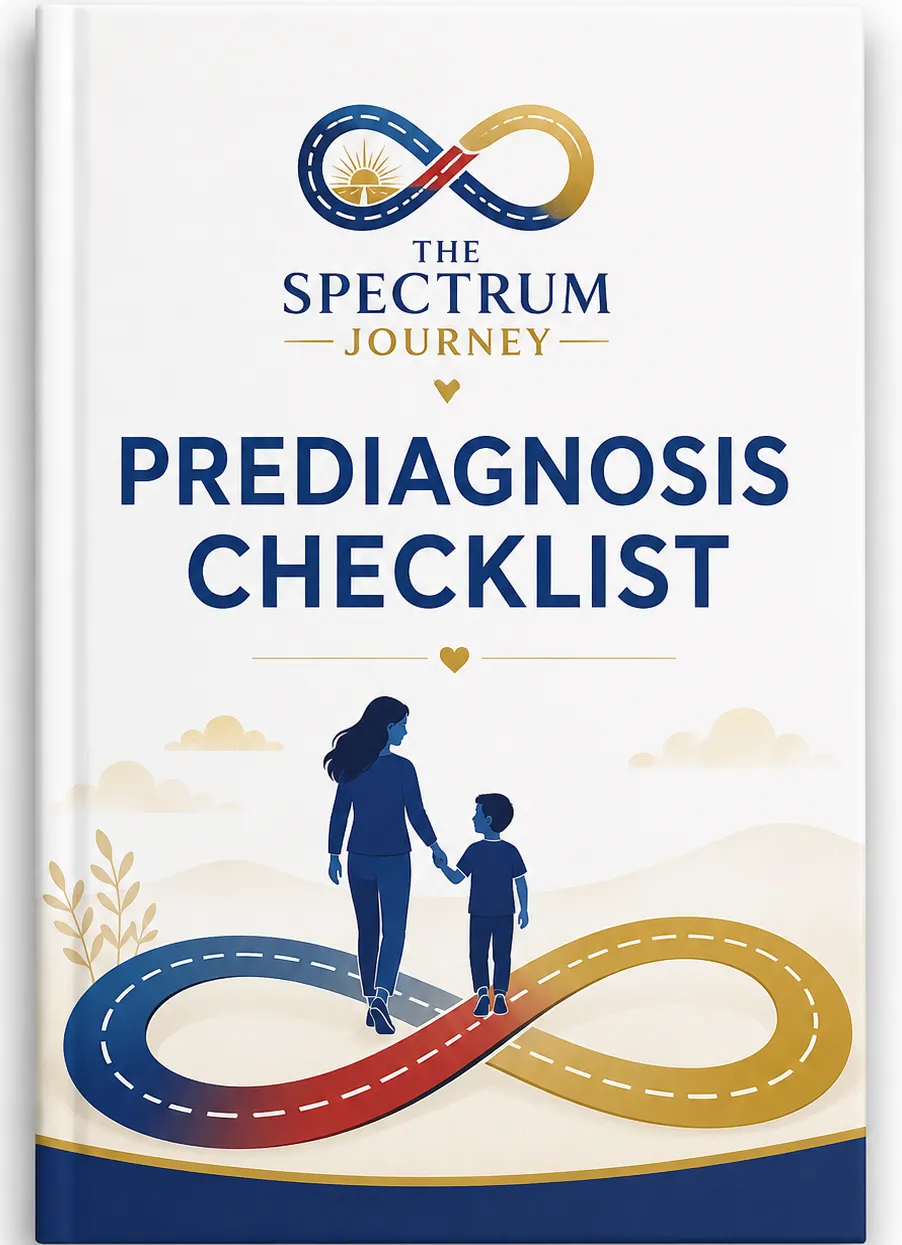
The Spectrum Journey Prediagnosis Checklist will help you:
Record behaviours, patterns and concerns
Prepare for conversations with professionals
Identify useful questions to ask
Organise important information
Take your next step with greater confidence
This is a Paragraph Font
Practical guidance for every stage of the journey

Tip 5: Honouring Self-Regulation Strategies
Tip 5: Honouring Self-Regulation Strategies
For many neurodivergent children - such as those with autism or ADHD - self-regulation looks very different from neurotypical expectations. Behaviours like rocking, humming, hand-flapping, fidgeting, or pacing are often referred to as "stimming" (self-stimulatory behaviour). Rather than habits to be corrected or eliminated, these movements and sounds are vital tools that help a child’s nervous system process sensory input, manage anxiety, and maintain focus.
When a child is allowed to self-regulate freely in safe environments, it prevents sensory overload and emotional burnout. Suppressing these natural instincts - often called "masking" - requires immense mental energy and can leave a child feeling exhausted, misunderstood, or dysregulated later in the day. By accepting these behaviours at home and advocating for them at school, you send a powerful message: their comfort and emotional safety matter more than appearing "still."
Of course, there are times when a specific strategy isn’t safe or practical for the environment. Instead of simply saying "stop," collaborate with your child to find an alternative that satisfies the exact same sensory need. If loud table-tapping disrupts a classroom, offer a silent textured fidget toy or a wobble cushion. If pacing isn't safe in a crowded waiting room, build in scheduled movement breaks outside.
Pro Tip: Empower your child by making them the expert on their own body. During a calm moment, ask, "What helps your body feel calmer or more focused?" Their answers - whether it is squeezing a pillow, listening to a specific song, or chewing on a sensory necklace - will give you a personalised, practical toolkit that works far better than any generic checklist.

You may be at the beginning of the journey, but you do not have to begin it alone.
Book a confidential guidance call with Madonna and talk through where you are, what is concerning you and what your next step may be.

Real guidance from a parent who’s walked the path.
Quick links
Contact
© The Spectrum Journey. 2026. All Rights Reserved.