
You don’t have to walk this journey alone.
When your child is showing signs of neurodivergence, has recently received a diagnosis, or you are trying to understand what support may be available, it can feel overwhelming.
There are new terms to understand, appointments to organise, decisions to make and systems to navigate.
I’m Madonna Volkman, a parent who has spent more than 20 years supporting my own neurodivergent children and navigating the challenges that can come with diagnosis, services, education and the NDIS.
I created The Spectrum Journey to give parents the practical guidance, reassurance and hope I wish I had received when my own journey began.

Real guidance from a parent who’s walked the path.
It’s normal to feel unsure about what comes next.
You may be wondering whether your concerns are valid, who you should speak to, what questions you need to ask or how you will manage everything your family may need.
You do not need to have all the answers today.
Sometimes the first step is simply talking to someone who understands the emotional and practical reality of the journey.

Understanding Your Next Steps
Preparing for Appointments

Navigating NDIS

Ongoing Parent Support
Identify questions to ask, information to gather and concerns you may want to raise with health, education or support professionals.
Identify questions to ask, information to gather and concerns you may want to raise with health, education or support professionals.
Receive practical, lived-experience guidance to help you understand terminology, prepare for conversations and feel more confident navigating the system.
Have someone in your corner who understands that this journey can be emotional, exhausting and difficult to navigate alone.

Meet Madonna
A parent, a guide and someone who understands
For more than 20 years, I have advocated for my two neurodivergent sons, searched for answers, attended appointments, navigated education and support services, and worked through the complexities of the NDIS.
I know what it feels like to wonder whether you are asking the right questions. I also know how much difference it can make when someone listens without judgement and helps you see the next step more clearly.
The Spectrum Journey was created so other parents can benefit from the knowledge, experience and practical lessons I have gathered along the way.
Free Resource
Not sure whether it's time to seek further support?
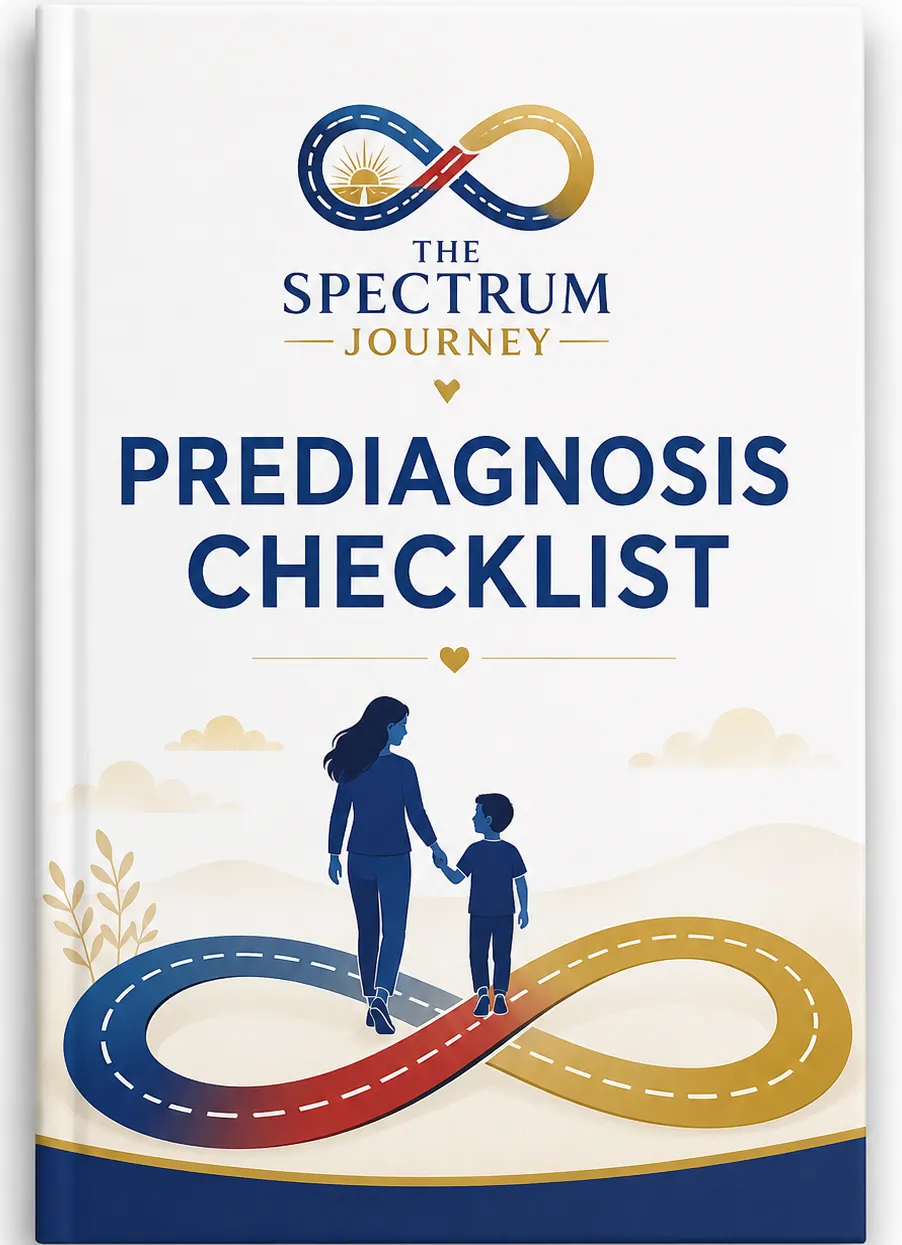
The Spectrum Journey Prediagnosis Checklist will help you:
Record behaviours, patterns and concerns
Prepare for conversations with professionals
Identify useful questions to ask
Organise important information
Take your next step with greater confidence
This is a Paragraph Font
Practical guidance for every stage of the journey

Building Your ‘No-Explanation-Needed’ Village
Building Your ‘No-Explanation-Needed’ Village
As parents and carers of neurodivergent children, wouldn’t it be wonderful to step into a space where the invisible armour can finally come off? A place where there is no judgement, no side-eyes in the grocery aisle, and no frantic apologising when your child’s nervous system hits its limit.
Raising a neurodivergent child can feel deeply isolating, especially when everyday outings require constant vigilance and translation for the people around you. That is why finding your "No-Explanation-Needed" village is transformative. When you surround yourself with people who naturally understand sensory overload, stimming, and non-linear communication, the exhaustion begins to lift—replaced by the deep relief and joy of true acceptance.
Where to Find Your Village (In-Person & Online)
Peer-Led Support Groups & Carer Cafés: Look for local parent-led coffee mornings or carer networks—often listed through regional directories like the Autism Support Directory. Because everyone in the room walks a similar path, you can sit down with a warm cuppa knowing nobody will blink if you have to leave mid-sentence to help your child regulate.
Sensory-Friendly & Quiet Hours at Local Venues: Many museums, libraries, cinemas, and play centres now host dedicated low-sensory sessions with dimmed lights, reduced noise, and smaller crowds. These events act as natural gathering spots where every family in attendance appreciates the value of ear defenders and quiet decompression zones.
Interest-Based & Inclusive Playgroups: Traditional playgroups can sometimes feel like a performance review. Instead, seek out neurodiversity-affirming playgroups or interest-led clubs (such as LEGO clubs, nature play, or coding groups) where children can engage via parallel play or deep dives without pressure to socialise in a neurotypical way.
Low-Pressure Online Communities: For days when leaving the house feels impossible, neuroaffirming online spaces—such as The Neurodivergent Parent Space—offer a virtual sanctuary where you can show up exactly as you are, whether you want to vent, celebrate a micro-milestone, or simply read along quietly without masking.
Neuroaffirming Therapists & Allied Health Hubs: Clinics that prioritise neuroaffirming care often become informal community hubs. Waiting rooms filled with sensory tools and understanding families frequently spark the most genuine hallway friendships.

You may be at the beginning of the journey, but you do not have to begin it alone.
Book a confidential guidance call with Madonna and talk through where you are, what is concerning you and what your next step may be.
Real guidance from a parent who’s walked the path.
Quick links
Contact
© The Spectrum Journey. 2026. All Rights Reserved.