
You don’t have to walk this journey alone.
When your child is showing signs of neurodivergence, has recently received a diagnosis, or you are trying to understand what support may be available, it can feel overwhelming.
There are new terms to understand, appointments to organise, decisions to make and systems to navigate.
I’m Madonna Volkman, a parent who has spent more than 20 years supporting my own neurodivergent children and navigating the challenges that can come with diagnosis, services, education and the NDIS.
I created The Spectrum Journey to give parents the practical guidance, reassurance and hope I wish I had received when my own journey began.

Real guidance from a parent who’s walked the path.
It’s normal to feel unsure about what comes next.
You may be wondering whether your concerns are valid, who you should speak to, what questions you need to ask or how you will manage everything your family may need.
You do not need to have all the answers today.
Sometimes the first step is simply talking to someone who understands the emotional and practical reality of the journey.

Understanding Your Next Steps
Preparing for Appointments

Navigating NDIS

Ongoing Parent Support
Identify questions to ask, information to gather and concerns you may want to raise with health, education or support professionals.
Identify questions to ask, information to gather and concerns you may want to raise with health, education or support professionals.
Receive practical, lived-experience guidance to help you understand terminology, prepare for conversations and feel more confident navigating the system.
Have someone in your corner who understands that this journey can be emotional, exhausting and difficult to navigate alone.

Meet Madonna
A parent, a guide and someone who understands
For more than 20 years, I have advocated for my two neurodivergent sons, searched for answers, attended appointments, navigated education and support services, and worked through the complexities of the NDIS.
I know what it feels like to wonder whether you are asking the right questions. I also know how much difference it can make when someone listens without judgement and helps you see the next step more clearly.
The Spectrum Journey was created so other parents can benefit from the knowledge, experience and practical lessons I have gathered along the way.

Free Resource
Not sure whether it's time to seek further support?
The Spectrum Journey Prediagnosis Checklist will help you:
Record behaviours, patterns and concerns
Prepare for conversations with professionals
Identify useful questions to ask
Organise important information
Take your next step with greater confidence
This is a Paragraph Font
Practical guidance for every stage of the journey
Building Safety Through Predictable Routines and Clear Cues
Tip 4: Building Safety Through Predictable Routines and Clear Cues
For neurodivergent children—including those with autism, ADHD, or sensory processing differences—the world can often feel unpredictable and overwhelming. Sudden changes or unclear expectations can trigger anxiety, sensory overload, and emotional dysregulation. Creating predictable routines and using clear cues helps bridge this gap, offering a sense of safety, autonomy, and calm.
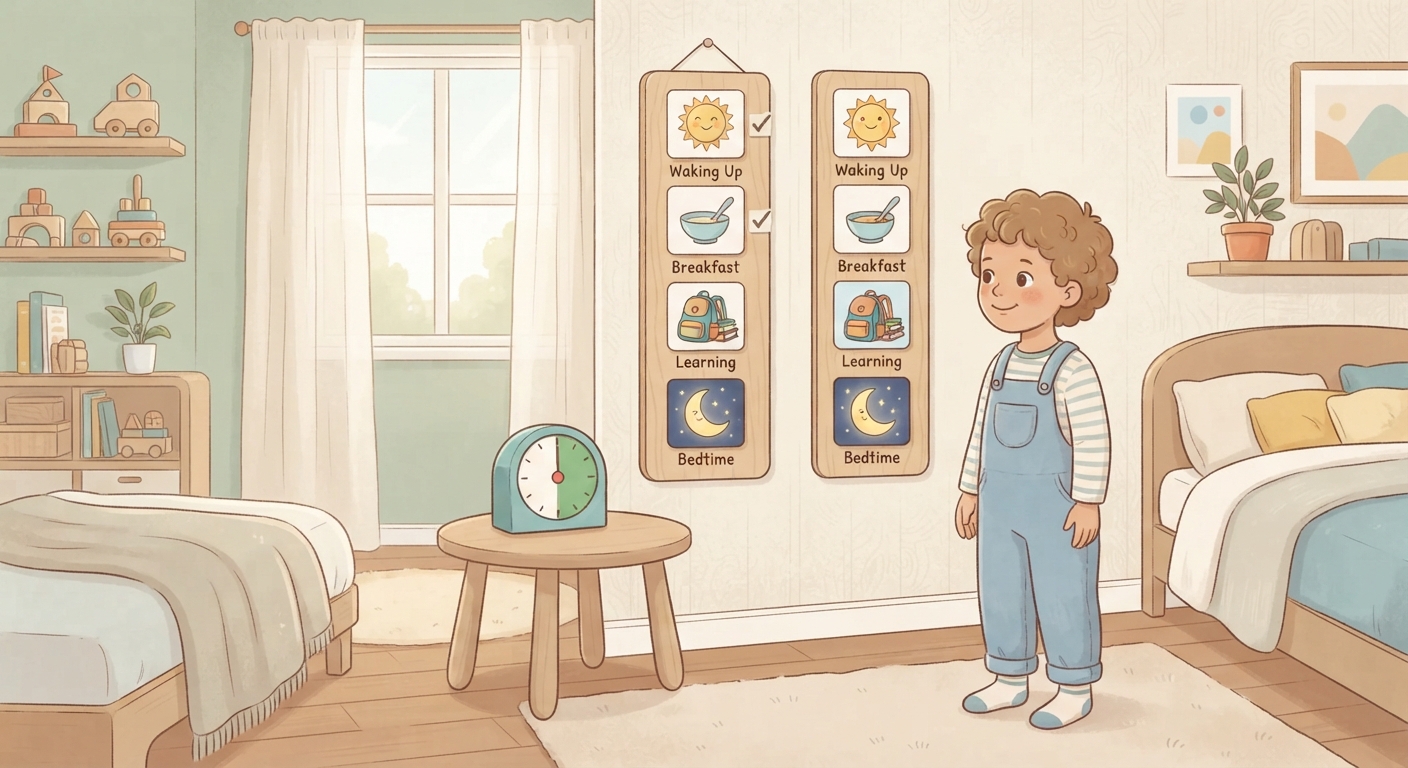
Predictable routines act as an anchor throughout the day. When a child knows what comes next, they spend less mental energy worrying about the unknown and more energy engaging with the world around them. Consistency in daily milestones—such as waking up, mealtimes, homework, and bedtime—builds confidence and reduces power struggles. Even when schedules must change, preparing a child in advance helps them process the shift smoothly.
Equally important are clear, concrete cues that signal transitions and expectations. Verbal instructions alone can sometimes be hard to process, especially during moments of stress or distraction. Pairing spoken words with visual, auditory, or tactile cues makes expectations much easier to understand.
Effective tools include:
Visual schedules:Picture charts or checklists that show the sequence of daily tasks.
Transition warnings:Simple countdowns, visual timers, or a specific chime played five minutes before an activity ends.
First-Then boards:A straightforward visual tool showing a required task followed by a preferred activity.
By combining steady routines with unmistakable cues, caregivers and educators create a supportive environment where neurodivergent children can thrive. Instead of guessing what is expected of them, children gain the clarity they need to navigate their day with confidence and independence.

You may be at the beginning of the journey, but you do not have to begin it alone.
Book a confidential guidance call with Madonna and talk through where you are, what is concerning you and what your next step may be.

Real guidance from a parent who’s walked the path.
Quick links
Contact
© The Spectrum Journey. 2026. All Rights Reserved.